The Amritsar
Field Guide.

A guest edition. Eight places, five plates, and a three-day plan for the city we live in. Written for our guests, printed by the door for the ones who forget to save the link.

— A note before you set out

A city of memory, as much as of sight.

08 places
05 plates
03 days
01 city

Most guidebooks give you Amritsar in two pages: the Golden Temple, the Wagah Border, a footnote about the food. This is not that. Amritsar is a small city with a very long memory — it holds the founding of a religion, the worst afternoon in the empire's record, the moment India was cut in two, and, on any given evening, the smell of ghee hitting a hot tawa somewhere down the lane.

You can see the main sights in three days. You will think about them for considerably longer. What follows is what we tell our guests over breakfast, arranged so it's easy to save. Distances are measured from our front door, in Dream City. When we say "best light," we mean it: an hour matters here.

Go slowly. Eat twice. Ask us for a driver.

01

Sri Harmandir Sahib.

ਸ੍ਰੀ ਹਰਿਮੰਦਰ ਸਾਹਿਬ · The Golden Temple

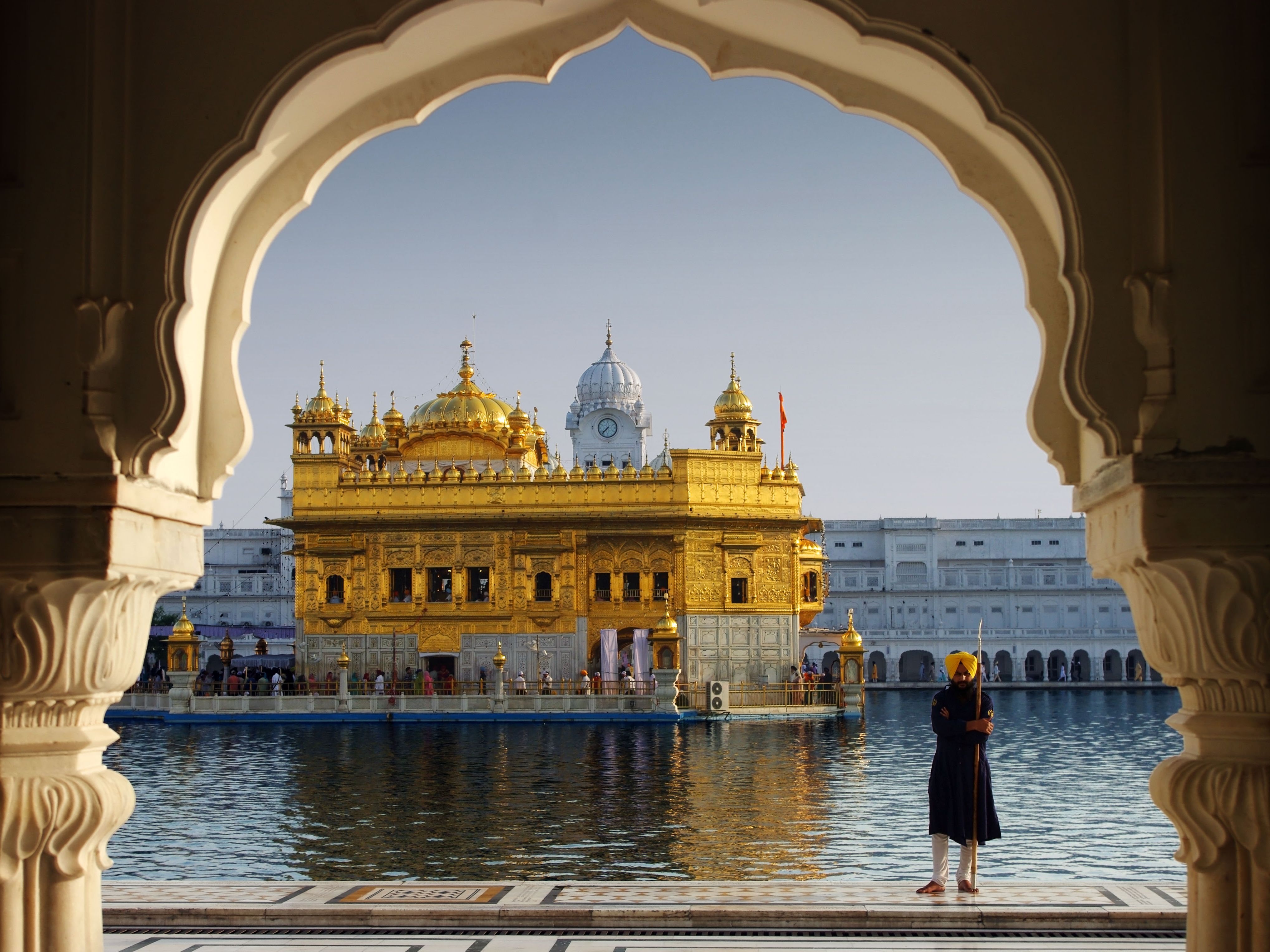
Nothing you have read prepares you. You take off your shoes, you cover your head, you walk down the marble steps into the parikrama, and there it is in the middle of the Amrit Sarovar — a gold-leafed temple floating on water, the sound of kirtan drifting over from the causeway. It is the holiest site in Sikhism, and one of the more thoroughly humbling half-hours available on earth.

Go at dawn or after ten at night, when the marble is cool and the queue for the sanctum is shorter. Eat at the Langar afterwards — the world's largest free community kitchen serves a hundred thousand people a day, and yes, you should sit and eat. It is the point.

From Paradise9.0 km · 22 min
Best light04:30 · 21:30
Time needed2 – 3 hours
DressHead covered · shoes off
Est. 1604 The Golden Temple, lit at night
The gold is not what stays with you. The quiet of the water does.
02

Jallianwala Bagh.

ਜਲ੍ਹਿਆਂਵਾਲਾ ਬਾਗ਼ · The Garden of Remembrance

Two hundred metres from the Golden Temple, down a narrow lane, is the small walled garden where, on the afternoon of 13 April 1919, Brigadier-General Dyer's soldiers fired for ten minutes into a peaceful gathering of some fifteen thousand people. The bullet-marks are still in the wall. The well into which people jumped to escape the firing is preserved.

Do not skip it. Go after the Golden Temple, when your walking pace has already slowed. The eternal flame at the centre is the closest India comes to a national memorial to its own bereavement. Read the plaques. Sit for a minute.

From Paradise9.2 km · 24 min
Best light16:00 – 17:30
Time needed40 minutes
Combine withGolden Temple visit
13 April 1919 Memorial detail
A garden the size of a football field, in which no one raises their voice.
03

The Wagah Border ceremony.

ਵਾਹਗਾ · The Beating Retreat

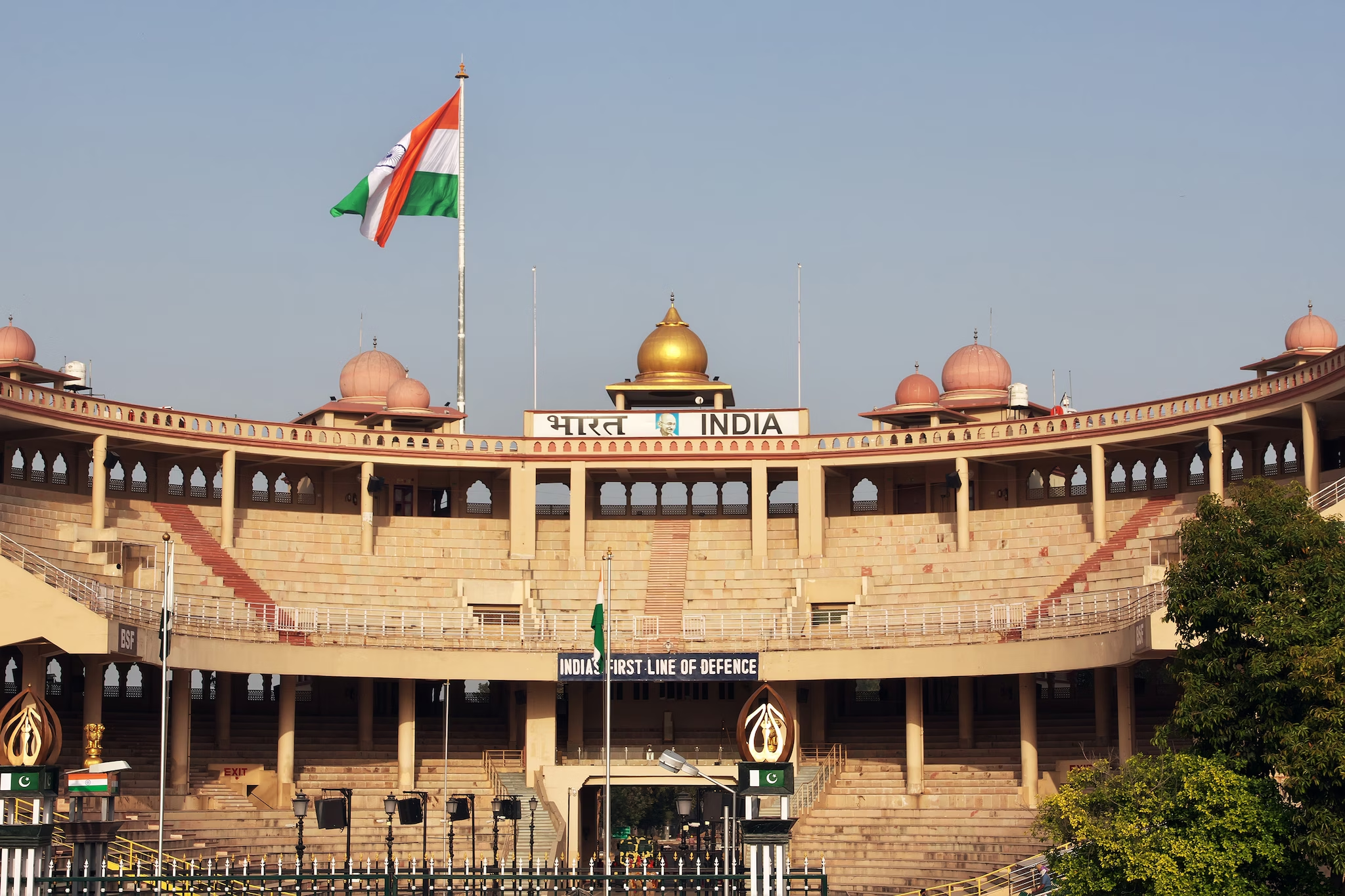
Half an hour west of the city, on the only road link between India and Pakistan, the Border Security Force and the Pakistan Rangers stage a nightly closing-of-the-gates ceremony that is somewhere between military drill, folk theatre, and family cricket match. Officers in fan-tailed hats kick their boots higher than their heads. The crowds on both sides sing. The gates slam shut. Everybody claps.

Get there ninety minutes early — the good seats fill fast. VIP passes are worth the small fee. Take a light shawl in winter and water in summer. It is a spectacle. It is also, unmistakably, a border.

From Paradise30 km · 45 min
Best light16:30 start · daily
Time needed3.5 hours w/ travel
Ask us forA driver & VIP pass
17:30 · Daily The India–Pakistan border ceremony
The one place on the subcontinent where the flag is lowered to a marching band and everyone means it.
04

The Partition Museum.

ਵੰਡ ਦਾ ਅਜਾਇਬ ਘਰ · Town Hall, Katra Ahluwalia

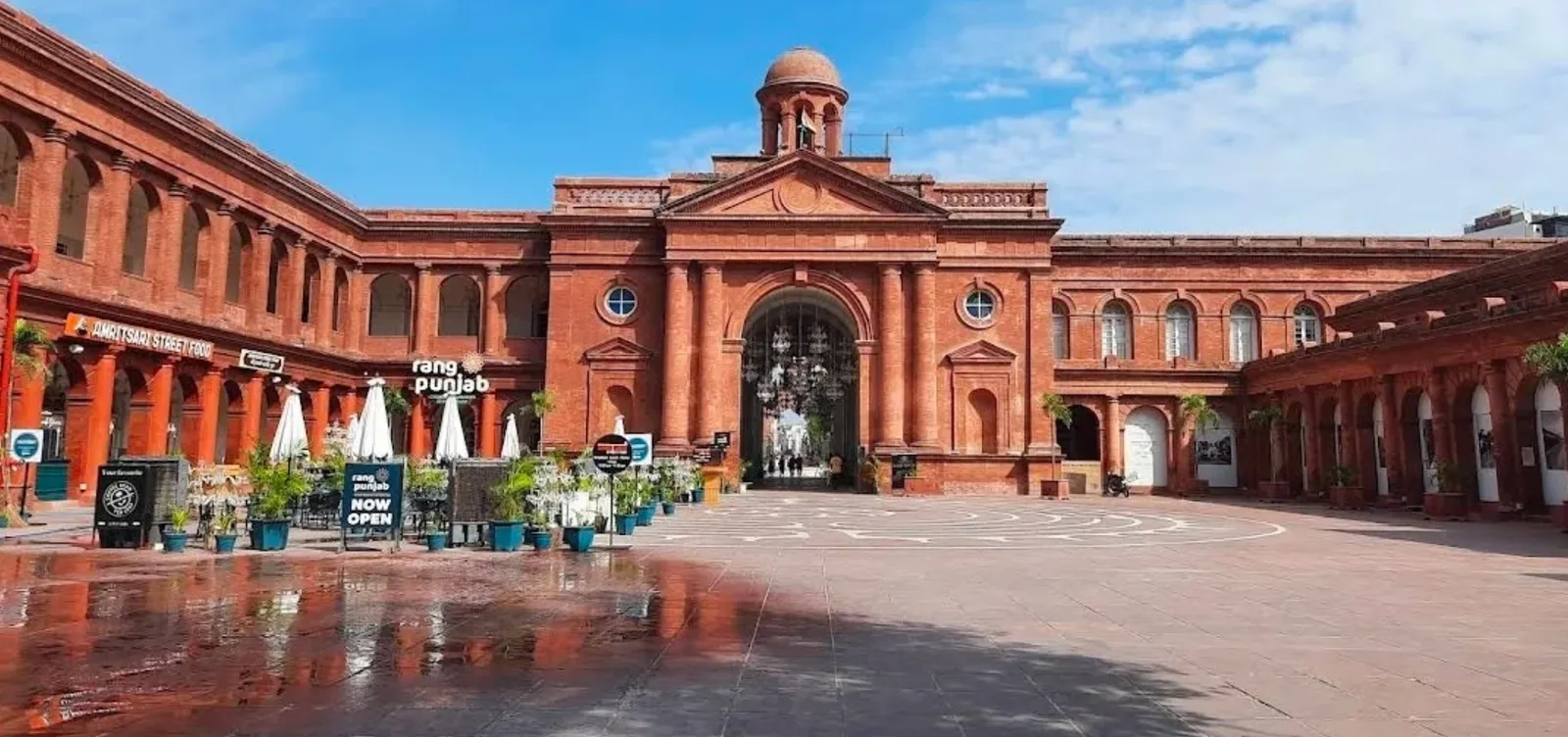
Housed in the old Town Hall a five-minute walk from the Golden Temple, this is the world's first museum devoted to the Partition of India — the 1947 splitting of the subcontinent that displaced fourteen million people and killed an estimated one to two million. It is done with rare care: oral testimonies, personal objects donated by survivors, a room shaped like a train carriage, and, at the end, a Tree of Hope.

Allow at least two hours. It is neither a fast nor a happy museum, and it should not be. Guides are available; take one if you are new to the history.

From Paradise9.0 km · 22 min
Best light11:00 – 15:00
Time needed2 – 3 hours
ClosedMondays
Opened 2017 A museum interior
Every family in Punjab has a Partition story. This is where the country finally sat down to listen.
05

Gobindgarh Fort.

ਗੋਬਿੰਦਗੜ੍ਹ ਕਿਲ੍ਹਾ · A working night out

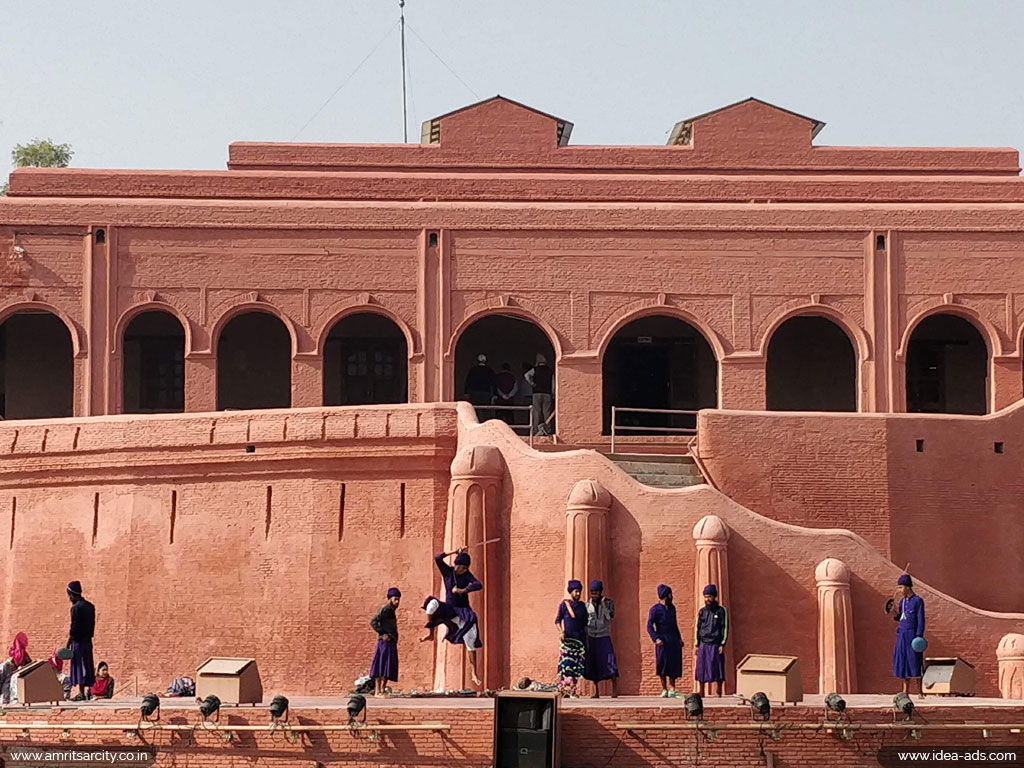
Built in the eighteenth century, held by Maharaja Ranjit Singh, then the British Army, then the Indian Army — Gobindgarh sat closed to the public for two centuries. Since 2017 it has been open, and rather cleverly repurposed as a live-history complex: turban-tying workshops, a 7D dolby "Whispering Walls" show on the history of Amritsar, a Sikh museum, a nightly sound-and-light show projected onto the Toshakhana.

Go in the evening. Eat at the Cambridge Cheeta courtyard afterwards. Bring cash for the games — this is a rare good use of "family-friendly."

From Paradise8.4 km · 20 min
Best light18:00 – 22:00
Time needed3 – 4 hours
Nightly show20:00 · Ind + Eng
Est. 1760 Fort walls at dusk
Two centuries of soldiers, one of the better nights out in the city.
06

Durgiana Temple.

ਦੁਰਗਿਆਣਾ ਮੰਦਰ · The Silver Temple

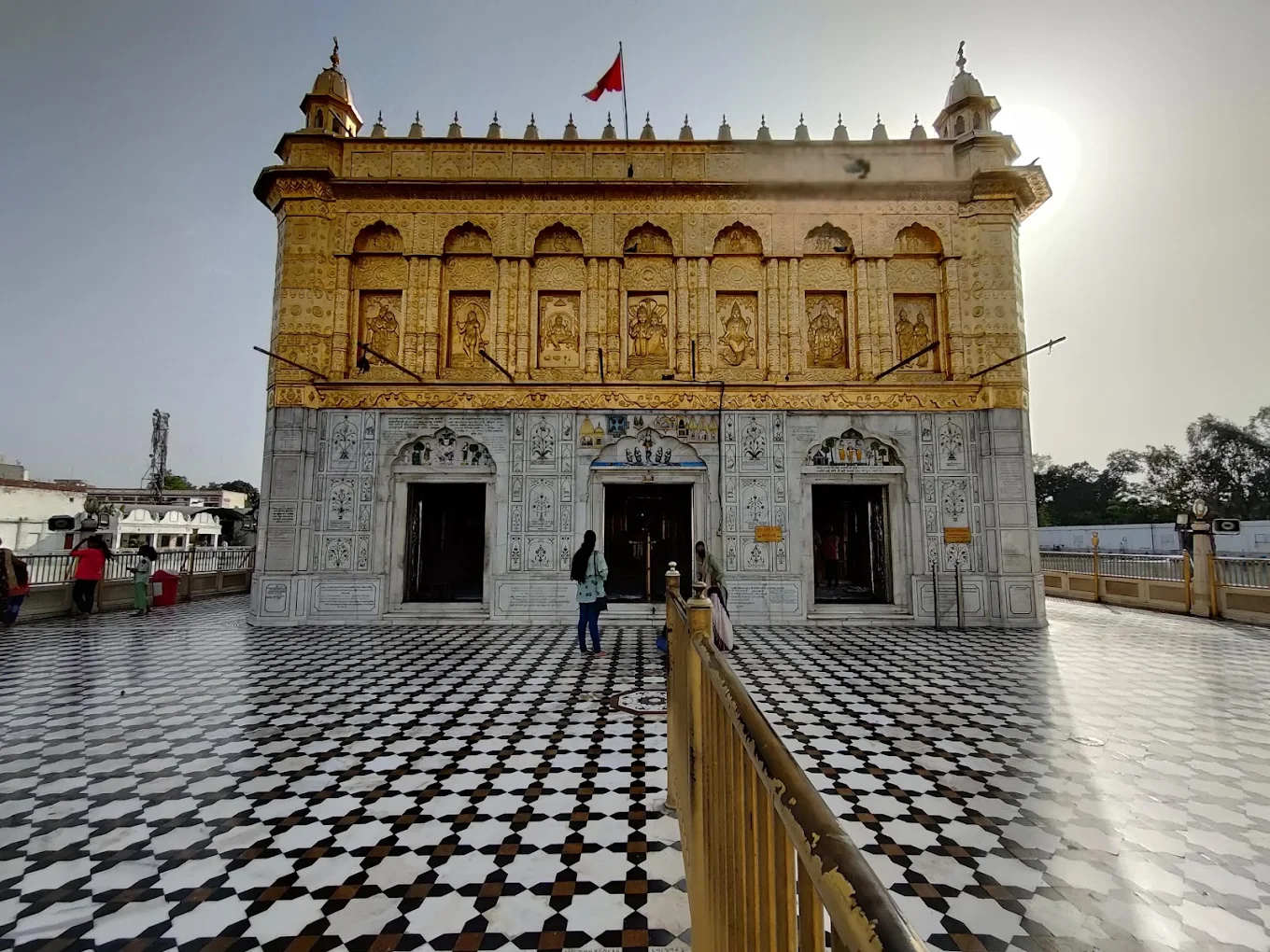
The other temple on a lake. Built in 1921 on the architectural template of the Golden Temple but dedicated to Durga, Lakshmi and Vishnu, its silver-worked doors have earned it the nickname the Silver Temple. Comparisons are inevitable and, mostly, unhelpful — Durgiana is quieter, less grand, and does not aspire to be anything other than a good neighbourhood temple. Which is exactly the point.

Half an hour is enough. Go at dusk, when the ghats are lit and the aarti is beginning.

From Paradise8.1 km · 19 min
Best light18:00 – 19:30
Time needed45 minutes
Also calledLakshmi Narayan Mandir
Est. 1921 A temple reflected in water
Not the Golden Temple's smaller cousin. Its quieter one.
07

Ram Bagh & the Summer Palace.

ਰਾਮ ਬਾਗ · Maharaja Ranjit Singh's garden

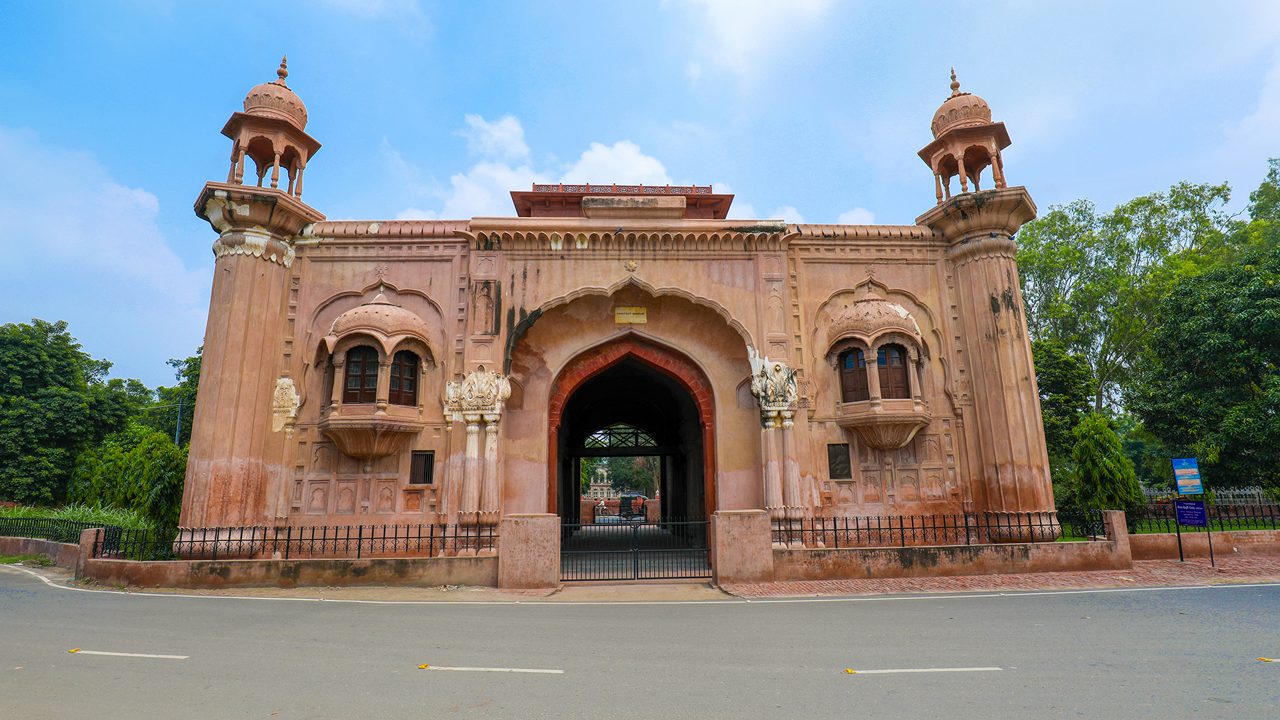
The summer garden of Maharaja Ranjit Singh, the lion of Punjab. Laid out in 1819 on the Shalimar template — geometric water channels, cypresses, a small red-sandstone palace at the centre that is now the Maharaja Ranjit Singh Panorama Museum. Weapons, coins, miniature paintings, a good half-hour on the Khalsa court.

The gardens themselves are the real treat — locals walk here at dawn, and unlike most Indian city parks, the grass is actually maintained.

From Paradise7.4 km · 18 min
Best light06:30 – 08:30
Time needed90 minutes
Museum10:00 – 17:00
Est. 1819 Historical gardens
Where the last great Sikh emperor came to escape the summer, and mostly still works.
08

Sadda Pind.

ਸਾਡਾ ਪਿੰਡ · "Our village"

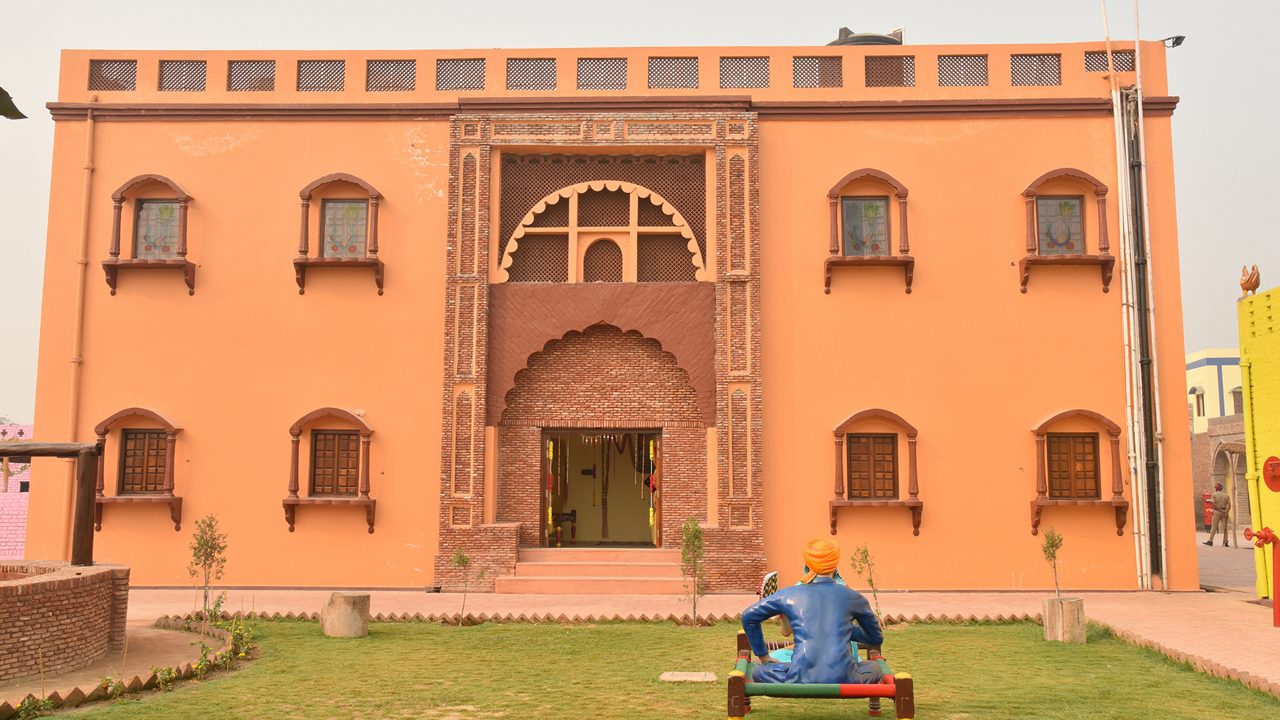
A living Punjabi village recreated on a twelve-acre plot on the outskirts of the city — potters at their wheels, a working blacksmith, a mud-walled house you can enter, a stage for bhangra and giddha performances after five. Kitschy in principle, genuinely charming in practice, and the only place in Amritsar you'll reliably see all the traditional trades under one roof.

Go in the late afternoon; stay for the folk performances at seven. Skip on Mondays.

From Paradise12 km · 28 min
Best light15:00 – 20:00
Time needed3 – 4 hours
IncludesDinner & folk show
Opened 2016 A traditional Punjabi village setting
A theme park for the actually-good version of Punjab.
— Ready when you are

We'll call the driver.
You bring the shawl.

Book on WhatsApp